What Actually Comes Out of a Kitchen or Bath Remodel
Ask anyone who has gutted a kitchen in a Maryville ranch house or refreshed a bathroom in one of the older bungalows near downtown and Maryville College, and they'll tell you the same thing: the debris pile is heavier and more mixed than people expect going in. A typical kitchen remodel generates old cabinets (particleboard or solid wood, sometimes both in the same kitchen if it's been added onto over the years), countertop material that can be laminate, tile, or solid surface, cracked or dated flooring, drywall from any wall moved or opened up for plumbing and electrical, and the appliances themselves if they're being replaced. Bathrooms add their own layer: torn-out tile and thinset, an old tub or shower surround, a vanity and cabinet base, subfloor that's often water-damaged around the toilet flange, and sometimes a cast-iron tub that weighs more than everything else in the load combined.
Homes built before the 1980s around Blount County frequently have plaster-and-lath walls under later drywall layers, and older tile work sometimes sits over mastic or backer materials that warrant caution. If your house was built before roughly 1980 and you're opening up walls, flooring, or old tile during a bath or kitchen gut, it's worth having the material tested before demolition starts rather than assuming. That's a separate conversation from dumpster sizing, but it affects your renovation timeline, so plan for it before you schedule a container.
The mix matters because dumpster rental isn't priced purely by volume. Construction and demolition (C&D) debris from a remodel is dense — tile, drywall, and cabinet material fill a container's footprint fast, but tile and countertop scraps especially add real weight. MRC Dumpster Rental prices flat rate, with delivery, pickup, and disposal built in and a set tonnage allowance included, so a load that's heavier than expected on a small container can run into overage charges. Describing your project honestly when you call — what rooms, roughly how old the house is, whether tile or cast iron is involved — gets you a size recommendation that actually fits instead of a guess.
Sizing a Dumpster for a Typical Remodel
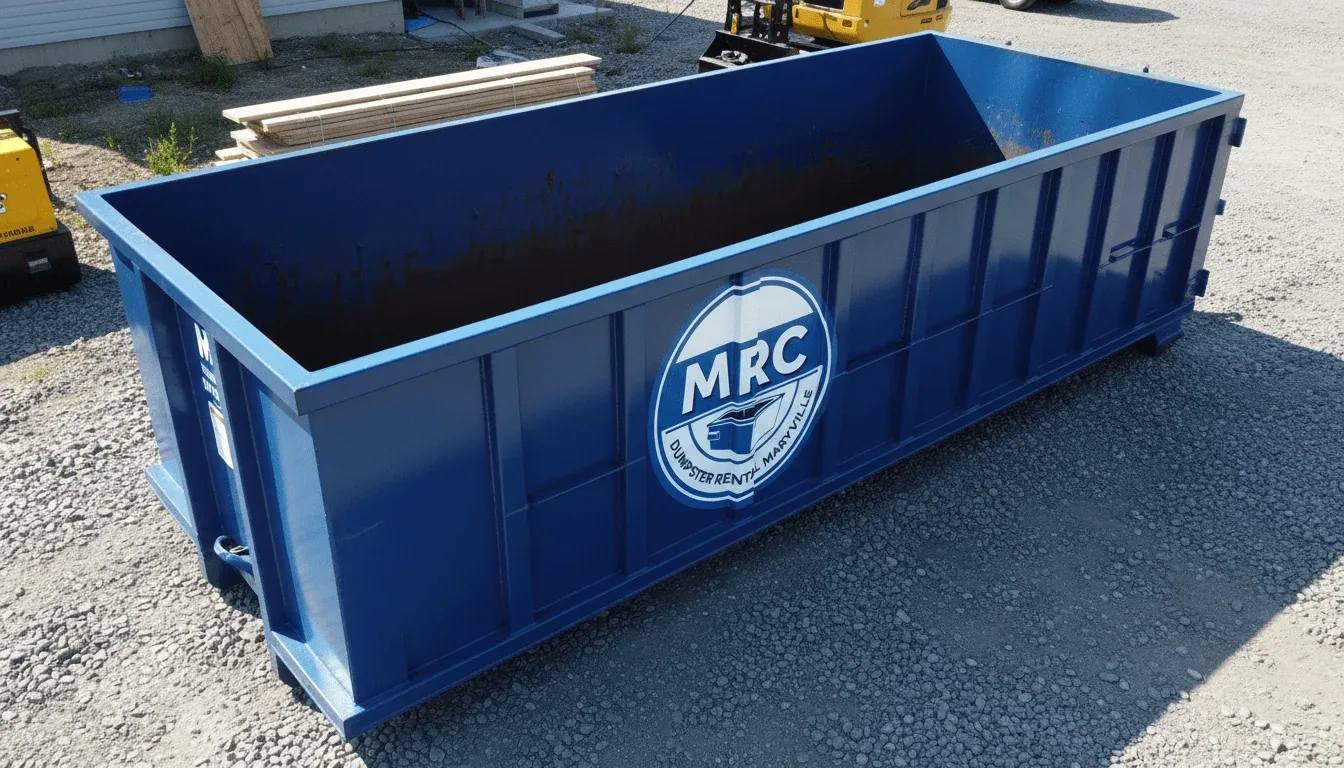
For a single bathroom remodel — vanity, tub or shower, tile, subfloor repair, and a bit of drywall — a 10 or 15 yard container is usually enough room, and the weight rarely maxes out a container that size unless there's a lot of tile and a cast-iron tub in the mix. A single kitchen remodel, especially one with full cabinet removal and a floor tear-out, tends to fill a 15 or 20 yard dumpster faster than homeowners expect, mostly because cabinets and countertop scrap take up awkward space that doesn't stack tight.
Combine a kitchen and one or two bathrooms in the same renovation, or add flooring replacement through connecting rooms, and a 20 yard container is the common call — enough volume for the mixed debris without paying for space you won't use. Whole-house renovations, additions that involve tearing off part of a roof or exterior wall, or projects generating construction debris alongside the interior demo start pushing toward 30 yard territory. A 40 yard container is more common on new construction and larger commercial jobs than on a typical home remodel, but if you're doing a full gut-to-the-studs renovation on a larger house, it's worth asking about.
The honest answer to "what size do I need" almost always depends on scope more than square footage — a small kitchen with cast-iron radiators and plaster walls can out-weigh a much bigger, newer kitchen with lightweight cabinets and drywall. When you call (865) 324-0741, tell the crew what rooms are involved, roughly how old the house is, and whether tile, plaster, or cast-iron fixtures are part of the tear-out. That's the fastest way to land on a size that doesn't need a second container mid-project or leave you paying for empty space.
Sorting Recyclable Material From General Debris
Not everything from a remodel has to go into general C&D debris, and separating it can save money and reduce waste even on a straightforward flat-rate rental. Metal is the clearest case: old appliances, metal cabinet frames, plumbing fixtures, HVAC ductwork, and any copper or aluminum scrap pulled during a remodel have scrap value and are worth keeping separate rather than burying in a mixed load, whether that means a separate pile for a scrap hauler or simply letting the crew know so it doesn't end up compacted under drywall. Clean concrete — a torn-out driveway apron, an old concrete patio slab, or a concrete pad from a demoed structure — is another category that's genuinely better handled apart from general debris. Concrete is heavy enough that mixing it into a general debris load eats through a tonnage allowance fast, and clean concrete (no rebar tangled with wood, no mixed masonry and trash) is often more efficiently disposed of on its own. If concrete or heavy masonry is part of your project alongside the interior remodel work, mention it when you book — a straight C&D dumpster and a load meant to include a slab of concrete are not really the same job.
Everything else from a typical kitchen or bath remodel — cabinets, drywall, tile and thinset, flooring, insulation, trim, and general construction debris — goes into the general debris category and is exactly what a standard roll-off is built for. You don't need to sort drywall from tile from cabinet scrap inside the container; that level of separation isn't expected and isn't how disposal facilities process C&D loads. The separation that actually matters is pulling out metal and concrete where it exists, keeping hazardous materials like old paint cans, solvents, propane tanks, and fluorescent bulbs out of the container entirely (those need separate disposal, not a dumpster), and not tossing in tires or large appliances with refrigerant without asking first.
None of this requires a second container in most cases. It just means a quick conversation with the crew about what's coming out of the house, so the load gets handled correctly and you're not paying overage fees for a weight problem that a little planning would have avoided.
Timing Delivery Around Your Renovation Schedule
The standard rental period is about seven days, and that's plenty for most single-room remodels if the container arrives close to demo day rather than sitting empty for a week while cabinets and fixtures get ordered. The mistake we see most often isn't running out of room — it's scheduling delivery too early and burning rental days before the sledgehammers come out, or too late, so the crew is standing around a kitchen full of torn-out cabinets with nowhere to put them. For a kitchen or bath gut, the container should land the morning demo starts, or the day before at the earliest. If your contractor's schedule has demo happening over a weekend or in a tight window, say so when you book — MRC can generally work around that kind of timing, and same-day delivery is available when the calendar shifts on short notice.
Longer renovations — a whole-house remodel, or a kitchen and two bathrooms staged over several weeks — sometimes need the container longer than the standard week, which is fine; call for daily or weekly extension rates rather than assuming the base rental covers the whole job. It's also worth thinking about pickup timing the same way: schedule the swap or final pickup for right after the demo and rough-in phase wraps, not weeks later when the container has become a convenient spot to toss finish-stage scraps that would have fit in a trash bag. That keeps the rental efficient and avoids tonnage creep from debris that has nothing to do with the original scope.
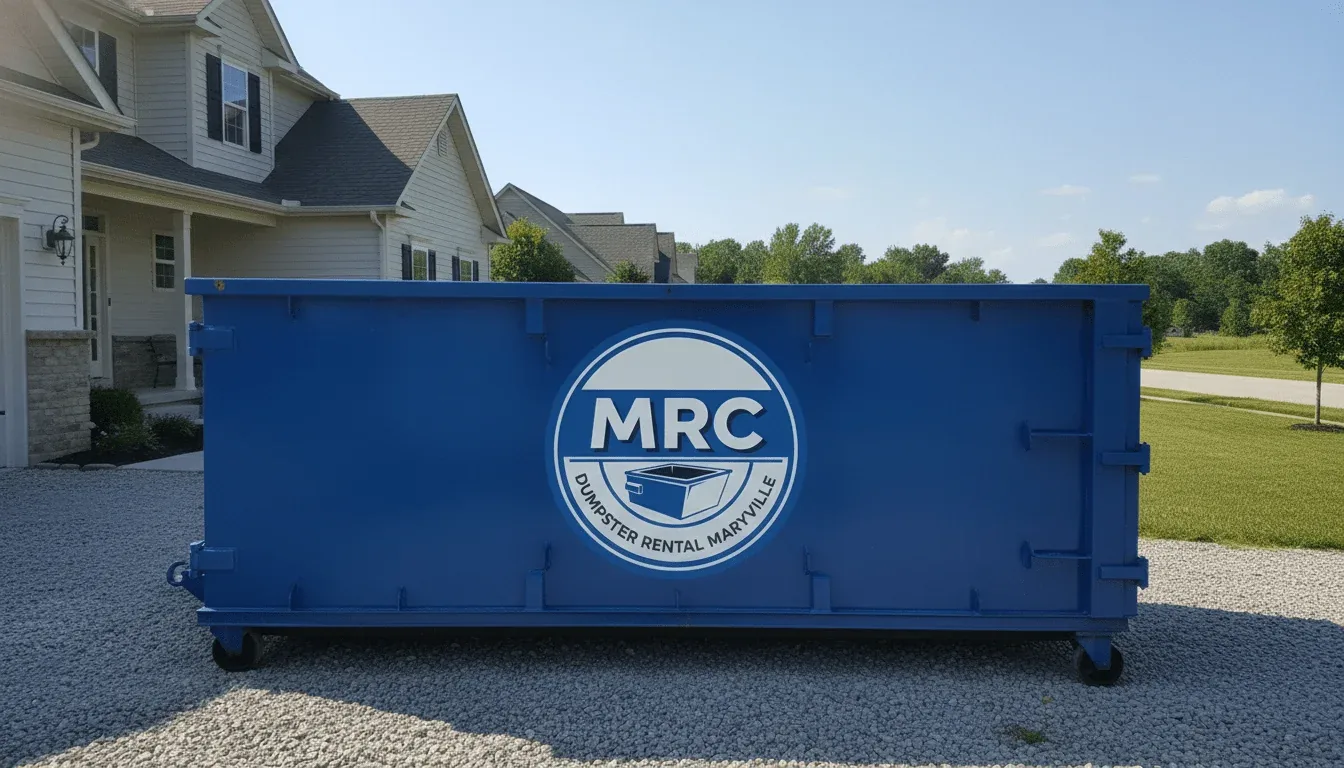
Placement matters for timing too. Most remodels in Maryville, Alcoa, and the surrounding towns put the container in the driveway, which typically doesn't require a permit as long as it stays entirely on private property. If your driveway is too tight, sloped, or already full of a contractor's equipment, and the container has to sit at the curb or in the street, Maryville has a temporary right-of-way permit process, and the crew can help you figure out whether you'd need one. Outside Maryville proper, permit rules vary by town and we haven't verified a specific ordinance for every community in the service area — Alcoa, Rockford, Townsend, Louisville, Friendsville, Walland, Eagleton Village, and Greenback each set their own rules, so if street placement is likely, call your town or county office to confirm before the container is scheduled to drop.
Getting the Right Container Without Guesswork
A renovation goes smoother when the dumpster shows up sized right, timed right, and set down somewhere that doesn't get in the crew's way for the next few weeks. That's less about knowing dumpster specs and more about giving an honest picture of the project when you call: which rooms, roughly how old the house is, whether tile or cast iron or concrete is involved, and when demo actually starts. MRC Dumpster Rental serves Maryville and the rest of Blount County — Alcoa, Rockford, Townsend, Louisville, Friendsville, Walland, and Eagleton Village — plus Greenback just across the Loudon County line, with flat-rate pricing that covers delivery, pickup, and disposal and no hidden fees. Typical remodel dumpsters run in the $350-$750 range depending on size, debris type, and how long you need it, but the only way to get a firm number for your specific project is to call (865) 324-0741 and talk it through with the crew — hours are Monday through Saturday, 7:00am to 7:00pm.