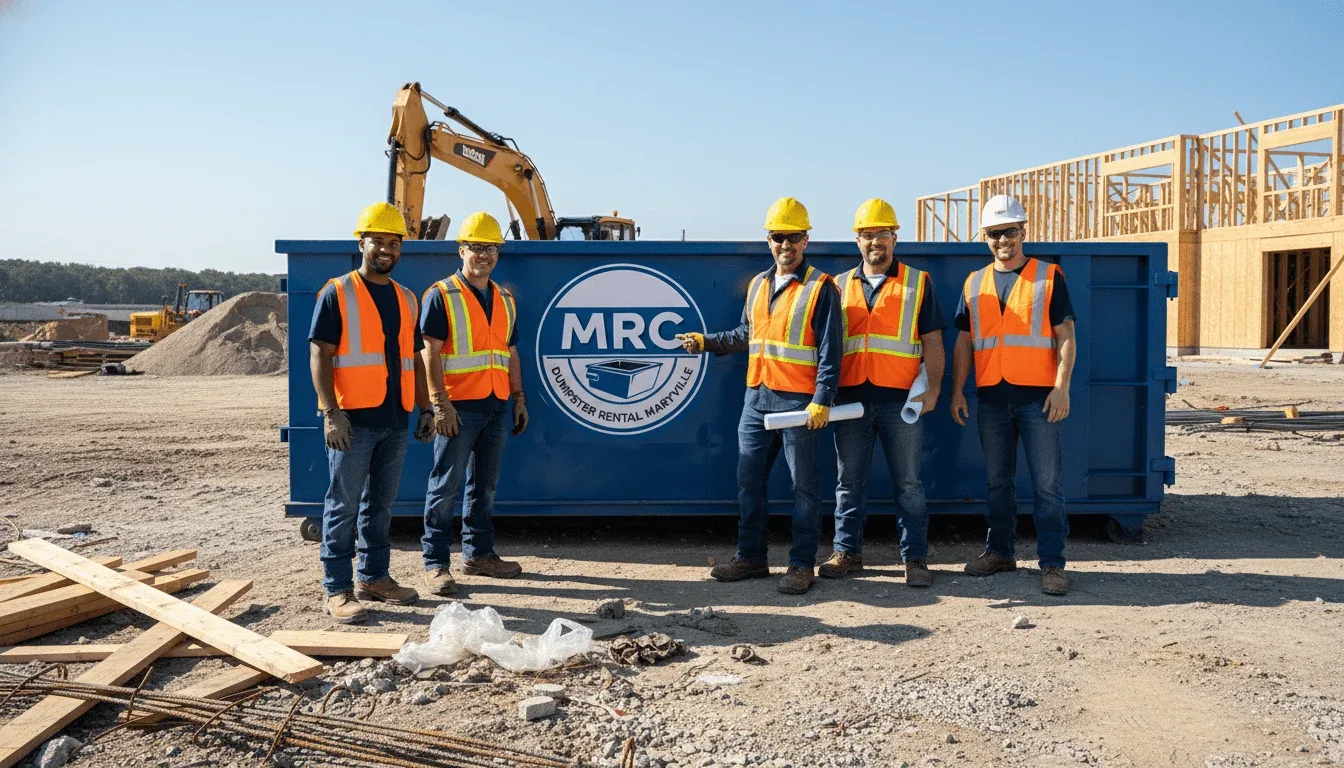
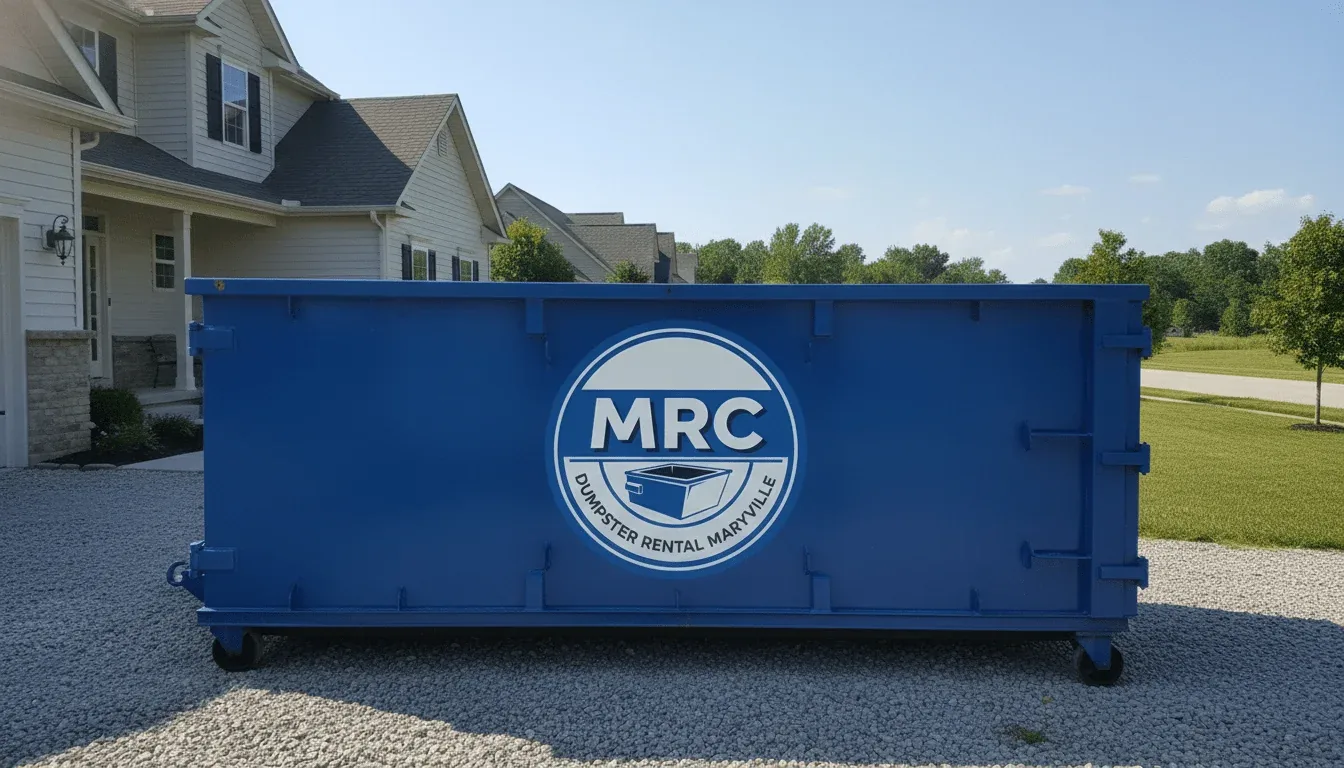
Ground-up construction generates a different waste stream than a remodel or a demo tear-out, and it changes shape at least three or four times before a house is ready for the final walk-through. A framing crew fills a container with cutoffs and OSB scrap in a matter of days. Drywall crews load a dumpster with dense, heavy waste that can hit weight limits before it looks full. Trim and finish carpenters produce a slower trickle of smaller debris spread over weeks. Builders who order one dumpster size for the whole job usually end up either paying for empty space early on or fighting overage fees once drywall starts. MRC Dumpster Rental works with framing crews, GCs, and remodelers building new homes and additions across Blount County, and this guide walks through how to size and schedule containers phase by phase instead of guessing once and hoping it holds.
Framing Waste vs. Finish Waste: Two Very Different Piles
The framing phase produces bulky, low-density debris: lumber cutoffs, OSB and plywood scrap, packaging from trusses and engineered lumber, and the occasional damaged stud or joist that gets swapped out. It fills a dumpster's volume fast but rarely comes close to its weight limit, which is why a bigger box during framing is usually the efficient call — you're buying cubic yards, not tons.
Drywall and finish work flip that equation. Drywall scrap, joint compound buckets, tile and thinset, and cutoff flooring materials are dense. A container that looked half-empty during framing can hit its tonnage allowance during the drywall phase well before it's visually full. This is the point in a build where a lot of first-time GCs get an unexpected overage charge, simply because they didn't know weight — not volume — is what drives cost once heavier materials are in the mix.
Trim carpentry, cabinetry, flooring, and punch-list work generate the least debris of any phase, but it shows up in smaller, more irregular batches over a longer stretch of time, which is a scheduling problem more than a sizing one.
Sizing a Container to Each Phase of the Build
There's no single "new construction" dumpster — the right size depends on which phase of the build you're in and how the site is staged. As a general framework:
On a lot with no space constraints, some GCs order one larger roll-off and simply have it swapped when it fills, rather than resizing between phases. On tighter lots — which describes a fair number of infill and new-construction lots around Alcoa and Eagleton Village — placement space can matter as much as size, and a mid-size container that gets swapped more often is easier to work around than a 40-yard box parked in the only spot where concrete trucks and framing crews also need to maneuver. Call the yard and describe the lot, the phase you're starting with, and roughly how long the build will run; MRC's team sizes off real jobsite conditions rather than a generic square-footage chart, since two houses of the same size can generate very different debris volumes depending on the framing method and finish level.
Scheduling Swap-Outs So the Crew Never Waits on a Dumpster
An active jobsite loses money every hour a crew stands around waiting on a full dumpster to get pulled. The standard rental period runs about a week, which works fine for a single-phase project, but a new build usually needs a rolling schedule of swaps timed to the framing calendar rather than a fixed weekly pickup regardless of how full the box is.
The practical approach is to call a few days ahead of a phase transition — say, the week before drywall starts — rather than waiting until the framing dumpster is already overflowing. That gives dispatch room to route a swap on a day that doesn't collide with a concrete pour, a truss delivery, or an inspection. On multi-month builds, some GCs set up a standing arrangement where MRC checks in with the site supervisor on a set cadence rather than waiting for a call every single time, which keeps a slow week from turning into a container sitting unused, and keeps a fast week from turning into a bottleneck.
It also matters where the container sits relative to how the site will be used later in the build. A dumpster staged in the future driveway location is convenient during framing but has to move before concrete or paving crews need that spot — worth mapping out at the start of the job rather than mid-swap.
New Construction Is Booming in Alcoa and Rockford
A meaningful share of the new-construction calls MRC handles right now come out of Alcoa and Rockford. Alcoa, home to McGhee Tyson Airport, is one of the fastest-growing areas in the Blount County market for new subdivisions and infill building, and that growth shows up as a steady stream of framing-to-finish jobs that need a dumpster on-site for weeks or months at a stretch, not just a weekend cleanout. Lots in newer Alcoa subdivisions tend to be tighter than older Maryville lots, so placement planning — where the container sits relative to the garage pad, the driveway, and other trades' staging areas — is worth a phone conversation before the first delivery.
Rockford, the small Blount County community between Maryville and Knoxville, is seeing its own mix of new single-family builds and additions, often on larger lots with more room to work with than in-town infill sites. That extra space usually means fewer placement headaches, but access roads into some Rockford developments are narrower or less improved than a subdivision closer to town, which is exactly the kind of detail MRC's dispatch team wants to know about before routing a truck — call ahead and describe how a delivery truck will actually get to the pad, not just the general area.
Coordinating Dumpster Placement With Subcontractors and GCs
On a job with multiple trades cycling through — framers, electricians, plumbers, HVAC, insulation, drywall — a dumpster that isn't clearly assigned tends to become a catch-all for whatever's easiest to toss, which speeds up how fast it fills and increases the odds of something going in that shouldn't (certain construction chemicals, paint, and other materials need separate handling rather than going in a general debris container — ask MRC if you're not sure about a specific material). A short conversation at the start of the job about what goes in the roll-off, and what doesn't, saves a headache later.
General contractors coordinating several active sites at once are often the ones calling MRC directly rather than routing every swap request through a site supervisor, and that's a workable arrangement — the key is making sure whoever's on-site day to day knows the container is coming and when, so the truck isn't blocked in by a parked trailer or material delivery when it shows up. For GCs running multiple builds across Blount County at the same time, it's worth setting up a standing relationship with MRC's dispatch team rather than treating every job as a one-off order; a GC who calls regularly gets faster scheduling simply because dispatch already knows the site, the access, and the typical swap rhythm.
Flat-rate pricing on a construction container includes delivery, pickup, and disposal, with the total landing somewhere in the $350–$750 range depending on size, debris type, and how long the container stays on-site — call for a firm number on a specific build rather than assuming a number from a different job, since framing-heavy jobs, drywall-heavy jobs, and long-duration finish work all price differently.
Permits and Placement on an Active Jobsite
Inside Maryville city limits, a dumpster placed entirely on private property — the job site itself, not the street — does not require a permit. If the container has to sit in the public right-of-way because the lot doesn't have room for it, you may need a temporary permit from the City of Maryville, and MRC's team can help walk you through that process.
For every other town in the service area — Alcoa, Rockford, Townsend, Louisville, Friendsville, Walland, Eagleton Village, and Greenback — MRC has not verified a specific municipal permit rule for roll-off placement, and rather than guess, the honest answer is to call your town or county office to confirm before the container arrives, especially if the lot is tight enough that the dumpster might need to sit anywhere near a street or shared access road. A quick call before delivery day is a lot easier than moving a full container after the fact.